• Posted on

3 Rain Ready Capsule Looks for Stylish Rainy Day Outfits

Decorative rainy day outfit title card

The formula that solves rainy day outfits is simpler than most closets suggest: a sealed-seam jacket over waterproof footwear, styled with the “volume above, streamlined below” rule so the silhouette still reads intentional. Skip cotton, suede, and untreated denim since they hold water and lose their shape. Build from merino or synthetic base layers instead, and everything else in the outfit becomes optional flourish, not function.


TL;DR:

  • Waterproof footwear should be rated at least 10,000mm hydrostatic head to handle steady rain, with a sealed-seam jacket to prevent leaks on top.

  • Merino or synthetic base layers are essential, while cotton, suede, and untreated denim should be avoided as they absorb water and lose shape quickly.

  • Outer layers should be functional but styled with volume above and a streamlined silhouette below, with accessories like wind-resistant umbrellas and waterproof hats.

  • Quick-dry outdoor pants and tactical cargo styles are recommended for wet commutes, and a simple rain capsule can adapt to most rain scenarios without full wardrobe changes.

  • Darker colors hide water spots better, but bright accents and glossy finishes add style and practicality, while minimal layering keeps comfort and breathability.

Shopnovaonline
Find Stylish Layers For Wet Days

Shop Nova Online brings together contemporary clothing, comfortable fabrics, and versatile styles for everyday dressing across seasons.

Table of Contents

What Makes the Two-Piece Rain System Work

The two-piece system means exactly what it sounds like: a sealed jacket up top, waterproof shoes down below, with nothing else required to carry the load. Everything else is supporting cast once those two pieces are locked in.

Seam sealing matters more than most shoppers realize. A jacket can be made of technically waterproof fabric and still leak at the stitch holes, which is why taped or welded seams separate a real rain shell from a water-resistant jacket that just repels light drizzle. Look for a hydrostatic head rating around 10,000mm for everyday commuting and errands. That number measures how much water pressure the fabric resists before it seeps through, and it pairs with a breathability rating (roughly 10,000 g/m²/24h is a solid commuter balance point, so you don’t trade dryness for a sweaty walk to the office).

  • A 2.5 layer shell is lighter and packs smaller, good for short commutes or travel.

  • A 3 layer shell has an inner lining that adds durability and comfort for all day wear or heavier storms.

  • A structured hood with a wired brim beats an umbrella in wind, since umbrellas invert and leave hands full.

  • Base layers should be merino wool or a synthetic wicking fabric, never cotton, because wet cotton clings, chills the skin, and stays damp for hours.

Statistic to remember: a shell rated near 10,000mm hydrostatic head is generally accepted as the threshold for reliable protection in steady rain, not just a passing sprinkle.

Seasonal Rainy Day Outfit Ideas That Actually Work

Weather changes the fabric weight, but the proportion rule stays constant: something with volume or visual interest on top, something clean and close to the body on the bottom. Here’s how that plays out across the year.

  1. Spring showers. Pair a trench coat in a bold color with slim ankle pants and rubber rain boots. Add a crossbody bag so your hands stay free for an umbrella. Swap the trench for a hooded anorak on windier days.

  2. Summer storms. Go lightweight: a packable shell or lightweight trench over a breathable dress, finished with low-profile waterproof sneakers instead of tall boots. Editors have leaned into exactly this kind of chic summer rain pairing for a reason. It travels well and dries fast.

  3. Fall drizzle. A chunky knit sweater under a sealed shell, paired with slim trousers or dark denim (treated, never raw) and duck boots. This is the season where styling rain boots with tailored pieces instead of hiding them under jeans really pays off.

  4. Winter sleet. Layer a wool coat over a fleece midlayer, then finish with insulated waterproof boots and a knit hat. Wool blend trousers hold their shape and shed light moisture better than cotton twill.

Quick outfit substitutes for shorter outings:

  • Swap tall rain boots for waterproof sneakers when you’re only outside for ten minutes.

  • Swap a full-length trench for a cropped anorak when you need more arm mobility.

  • Swap wool trousers for quick-dry technical pants on days with a longer commute in standing water.

For office days, keep the top half structured (a blazer-cut raincoat, a bright scarf) and the bottom half narrow. That contrast is what makes a rain outfit look chosen instead of thrown on.

Footwear, Materials, and What to Avoid

Footwear decisions come down to how much standing water you’ll actually cross, not just whether it’s raining.

Rubber rain boots handle full submersion, duck boots split the difference between function and polish, and waterproof leather works for quick dashes between a car and a door but shouldn’t be trusted in deep puddles.

Fabric behavior explains a lot of rainy day frustration. Cotton absorbs water and holds onto it, which is why a soaked cotton hoodie feels heavier and colder as the day goes on. Merino wool and synthetic blends shed water faster and dry against the skin instead of staying saturated. Suede and cotton are the two fabrics to avoid outright in wet weather, since both stain and stiffen when they dry.

Two maintenance habits keep gear working: condition leather boots every few weeks in wet season to keep the material supple, and reapply a DWR (durable water repellent) spray to shells and boots once the fabric starts soaking through instead of beading water.

Pro Tip: Grip matters as much as waterproofing on city sidewalks and subway stairs. A soaked sock is an inconvenience; a slip on wet tile is an actual hazard, so check the sole tread before you check the waterproof rating.

Build a Rain-Ready Capsule With Shop Nova Pieces

Three outfits, built around pieces that already work double duty as rain gear and everyday clothing, cover most rainy weather scenarios without requiring a closet overhaul.

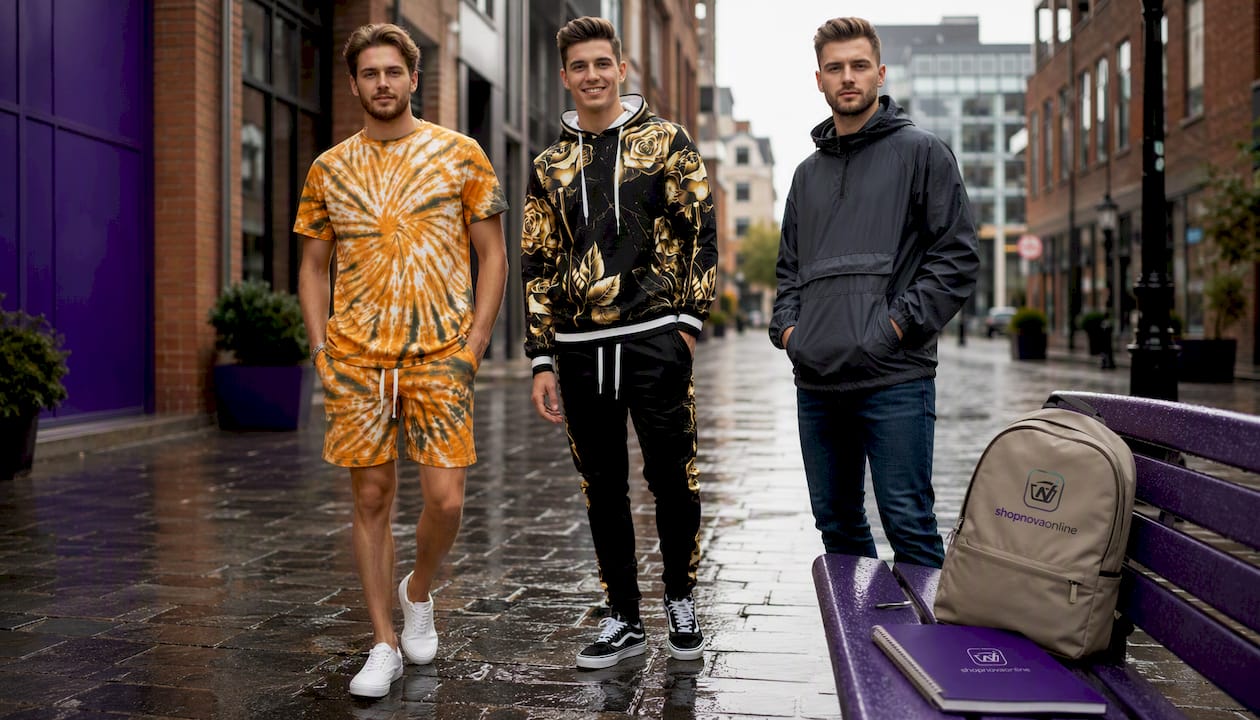
Capsule 1: Warm-weather packable. The Tie Dye Shirt & Shorts Set works for short summer storms because it’s lightweight and dries fast if you get caught in a quick downpour. Throw a packable shell over it and you’re covered until the sun comes back out.

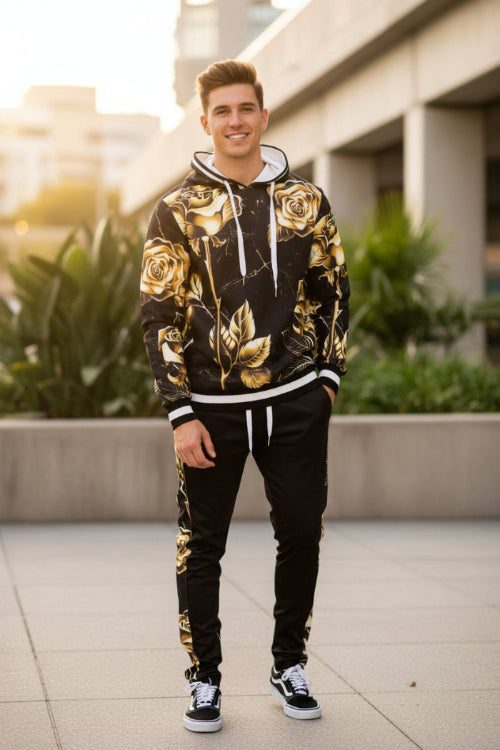
Capsule 2: Casual layered look. The Printed Hoodie & Sweat Set makes a solid mid-layer for cooler, wetter days. Wear it under a sealed shell with quick-dry bottoms underneath, and you get warmth without the bulk of a heavy coat.

Printed Hoodie & Sweat Set | Stylish Matching Sweatshirt Set

Capsule 3: Light outerwear. The Color Block Anorak Jacket functions as the outer shell itself for light to moderate rain, packable enough to stash in a bag on days when the forecast is uncertain.

[brand_signal] Shop Nova Online focuses on fashionable, affordable clothing built for real life, including inclusive sizing across coats, jackets, and casual sets.

Capsule

Core Piece

Best For

Warm weather

Tie Dye Shirt & Shorts Set

Quick summer storms

Layered casual

Printed Hoodie & Sweat Set

Cool, damp commutes

Light outerwear

Color Block Anorak

Uncertain forecasts

Author credit: capsule guidance compiled by Joseph Kvarnstrom.

Packing Checklist for Staying Dry and Polished

Carrying the right small items matters as much as what you’re wearing.

  1. Pack a compact umbrella and a packable shell as backup, even if you’re already wearing a raincoat.

  2. Tuck a spare pair of socks and a microfiber cloth into a waterproof pouch for quick fixes.

  3. On arrival, remove the wet outer layer first, swap socks if needed, then hang the shell somewhere it can drip dry instead of balling it up.

  4. Use a small zip pouch inside your bag to keep wet shoes from soaking everything else.

Layering Techniques for Rain Protection and Comfort

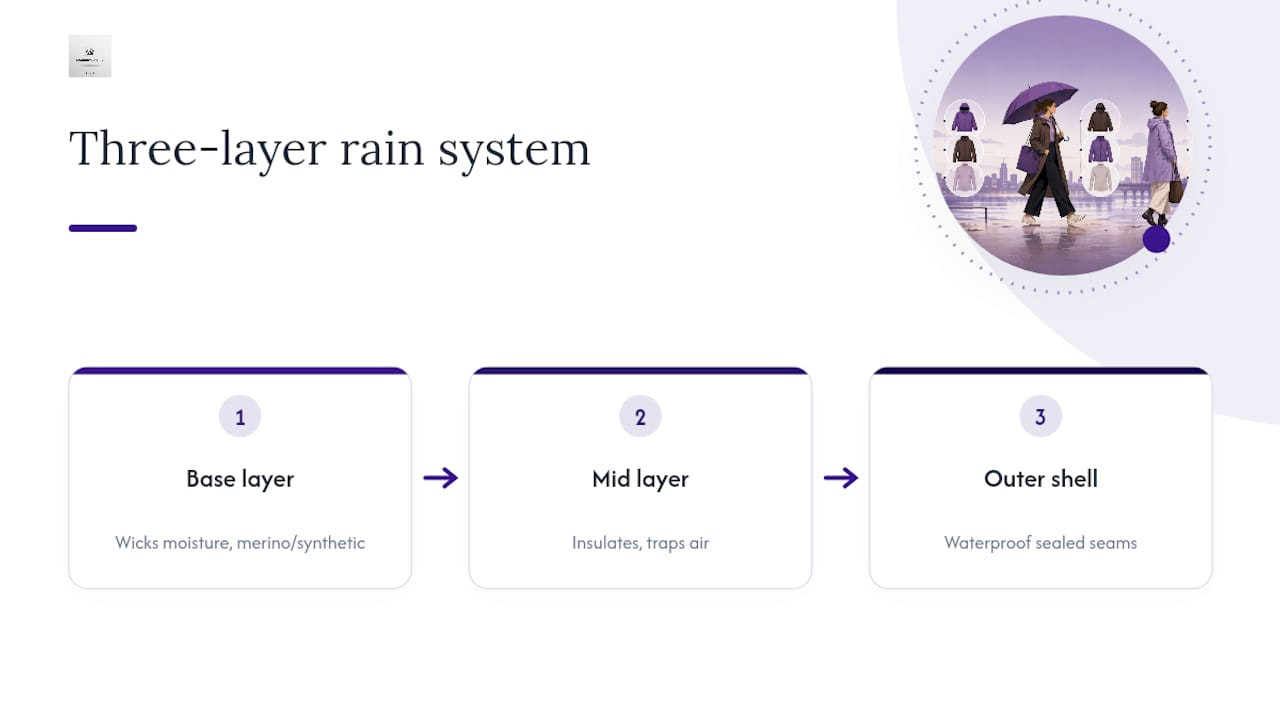
Layering for rain follows a different logic than layering for cold. Cold-weather layering is about trapping heat; rain layering is about managing moisture while still trapping some heat, which means the order of fabrics matters more than the number of layers.

Start with a base layer that wicks moisture away from skin, merino wool or a synthetic blend, never cotton. That base stays close to the body and needs to feel almost like a second skin, not bulky. The middle layer adds insulation, a fleece pullover or lightweight sweater, and it should be loose enough to trap air but not so bulky it fights with the outer shell.

The outer layer is the only piece that actually needs to be waterproof rather than water-resistant. This is where the sealed-seam jacket does its job, blocking rain from reaching the insulating layers underneath. If the outer shell fails, everything else gets wet fast, since wool and synthetics resist water but don’t block it outright the way a sealed membrane does.

Three-layer rain protection system

One mistake worth calling out: piling on too many mid-layers under a shell that isn’t breathable enough traps sweat, which soaks the inner layers just as thoroughly as rain would from outside. Match the shell’s breathability to your activity level. A slow walk to the train needs less breathability than a bike commute. Keep the layering system simple: one wicking base, one insulating mid-layer, one waterproof outer, and adjust the mid-layer’s thickness by season rather than adding more pieces.

Accessories for Rainy Days

The right accessories finish a rain outfit and solve problems clothing alone can’t.

A compact umbrella with a wind-resistant frame is worth the extra cost over a flimsy dollar-store version, since a frame that flips inside out in gusty rain is more annoying than just getting wet. Look for one that folds small enough to fit in a bag rather than one that needs its own tote.

Waterproof hats solve a problem hoods don’t: peripheral vision. A structured rain hat with a brim keeps water off your face without the tunnel-vision effect of a hood pulled up tight, and it works well on days when wind makes an umbrella impractical.

Bags deserve more attention than most people give them. A water-resistant tote or crossbody with a flap closure protects a laptop or paperwork far better than a regular canvas bag, which soaks through at the seams within minutes of steady rain. If your usual bag isn’t water-resistant, a simple solution is a slim waterproof pouch or dry bag insert that goes inside it.

Scarves and gloves round things out, mostly for warmth in cooler rain rather than water protection, but a bright scarf against a neutral shell is also the easiest way to keep a rain outfit from looking purely functional.

Choosing Colors and Patterns That Hold Up in Wet Weather

Color choice in rain is partly practical and partly about mood. Darker tones like navy, charcoal, and deep green hide water spots and splashes far better than pale colors, which show every droplet and mud splatter within the first block of walking.

That said, an all-dark outfit on a gray, overcast day can read as flat or even gloomy. This is where a single bright accent, a yellow rain boot, a red umbrella, a colorful anorak, does real work. It breaks up the gray palette without sacrificing the practicality of darker base pieces.

Patterns behave differently in rain than solid colors. Small, dense prints (tight florals, fine plaids) tend to camouflage water spots better than large, bold patterns, which can look uneven once wet in patches. Glossy or rubberized finishes, common on rain boots and slickers, naturally read as more purposeful in rain than matte fabrics, since the shine itself signals “built for this weather” rather than “caught off guard.”

A safe styling formula: neutral or dark base pieces, one saturated color accent, and a texture (rubber, waxed cotton, or a glossy shell) that visually announces the outfit was planned around the weather rather than despite it.

Balancing Style and Functionality in Rainy Day Outfits

The tension in dressing for rain usually comes down to one instinct fighting another: the urge to protect yourself completely versus the urge to look put together. Neither has to lose.

Function should win on the pieces that touch water directly, meaning the outer shell and the shoes. Compromising on seam sealing or waterproof rating to get a cuter jacket almost always backfires, since a jacket that leaks after twenty minutes isn’t stylish, it’s just wet fabric. But once those two non-negotiables are covered, everything else in the outfit is open territory for personal style.

This is exactly why the “volume above, streamlined below” rule works so well as a shortcut. It gives function room to lead on top (a structured hood, a proper rain-rated fabric) while style leads on the bottom half, where a slim silhouette in dark, water-resistant trousers looks intentional rather than bulky. The outfit ends up reading as a choice, not a concession.

A useful gut check before leaving the house: if you removed the umbrella and stepped outside for thirty seconds, would the outfit still look finished? If the answer is yes, the balance is right.

Author Perspective: Use Rain Gear as a Deliberate Style Move

Most people treat rain gear as a costume they put on reluctantly and take off the second the sky clears. That’s a missed opportunity. A colorful anorak or a pair of glossy rain boots can be the most interesting piece in an outfit, not the most apologetic one.

Try pairing a sleek trench with a loud scarf, or letting bright boots be the one bold choice against an otherwise quiet outfit. Function stays first: the seams still need to be sealed, the boots still need to keep water out. But once that’s settled, there’s no reason rain gear has to look like an afterthought.

— Joseph Kvarnstrom

Shop Nova Online Picks: Quick Ways to Buy the Looks

You can find rain-ready pieces that combine functionality and style online, without having to choose between staying dry and staying stylish. For the warm-weather capsule, the Tie Dye Shirt & Shorts Set is quick-dry and packable, ready for a summer storm that clears up fast. For layered, cooler days, the Printed Hoodie & Sweat Set slides under a shell without adding bulk. And for the piece that actually functions as your outer layer in light rain, the Color Block Anorak is lightweight enough to carry when the forecast is a maybe.

Tie Dye Shirt & Shorts Set | Casual Summer 2-Piece Outfit

If you want bottoms that hold up better than jeans on a wet commute, Shopnovaonline’s quick-dry outdoor pants and tactical cargo pants are built to shed water instead of soaking it up. For fall and winter rain, the woolen trousers guide covers care basics for cooler-weather bottoms that pair well with a sealed shell. And if none of these three capsule pieces match what you’re picturing, browse the full Shopnovaonline collection for more coats, jackets, and everyday sets in inclusive sizing. Start with whichever capsule matches this week’s forecast, and build out from there.

Sources

FAQ

What’s the Best Thing to Wear on a Rainy Day?

A sealed-seam jacket paired with waterproof footwear, either rubber rain boots or duck boots depending on how much standing water you’ll cross. Everything underneath should be merino wool or synthetic, not cotton.

What Is the 3-3-3 Rule for Clothes?

The 3-3-3 rule is a closet-organizing method, not specific to rainwear. It has no direct connection to dressing for rain, though the same minimalist thinking applies: a few versatile, weather-ready pieces beat a closet full of options that don’t hold up wet.

What Are Some Good Outfits for Rainy Days?

Spring calls for a bold trench with slim pants and rain boots. Summer works best with a lightweight shell over a breathable dress and waterproof sneakers. Fall pairs a chunky sweater with duck boots, and winter layers a wool coat over insulated waterproof boots.

What Should I Wear in Rainy Weather?

Prioritize a waterproof outer layer with taped seams over an umbrella alone, since wind defeats umbrellas fast. Keep the silhouette streamlined below the waist and choose footwear rated for the amount of standing water you expect to walk through.

Leave a comment

Read Also

See all Fashion & Style Blog | Women’s and Men’s Fashion Trends
Tall man checking trouser length over shoes
  • Posted on
Tall Men's Pants Guide: Inseam, Rise and Fit
Find the right pants as a tall man: which inseam fits your height, how rise and waist should sit, how to measure at home, and how to choose for work or weekends.
Yellow underarm stain on a white cotton T-shirt
  • Posted on
How to Remove Deodorant Stains From Clothes
Remove deodorant stains and yellow armpit buildup from shirts with dish soap, white vinegar or oxygen bleach. Step-by-step fixes by stain age and fabric.
Decorative T-shirt fit title card
  • Posted on
Measure First: 4 T-Shirt Fit Rules for Men
Measure shoulders, chest, sleeves and hem with flat garment specs, then match to slim, classic or relaxed cuts. Shop Nova maps each fit to your measurements.