• Posted on

7 Measurements to Verify Before Checkout for Shoppers and Home Sewers

Decorative clothing measurement title card

ย 

To get clothes that fit, record seven core measurements with a flexible tape over fitted undergarments: chest or bust, natural waist, hips, shoulder width, sleeve length, inseam, and full length. Measure each spot twice, average the two numbers, keep the tape level and snug (never tight), and write everything down in inches. Re-measure every 3 to 6 months since weight, posture, and muscle mass shift more than most people realize.


TL;DR:

  • Consistently measure your body over a fitted, light layer using a flexible tape and record each measurement twice, averaging to improve accuracy.

  • Be aware that mass-market jeans often add vanity sizing, making actual waist measurements up to an inch larger than labeled sizes.

  • For bottoms, measure the natural waist and hips separately, as low-rise styles sit below the natural waist, affecting size choices.

  • Re-measure every three to six months or after significant body changes to maintain precise size tracking, especially since clothing fit relies heavily on accurate measurements.

  • Always compare your measurements with the specific retailerโ€™s size chart, not just the tag size, and account for fabric stretch and intended fit when choosing sizes.
Shopnovaonline
Find Your Next Comfortable Fit

Explore Shop Novaโ€™s stylish clothing in inclusive sizes, with versatile designs and fabric choices suited to everyday wear.

Table of Contents

Tools and Prep for Measuring Your Body for Clothes

You donโ€™t need a professional kit to measure body for clothes accurately, but a few basics make the difference between a reliable number and a guess. Skip the metal hardware-store tape. You need something that bends around a rib cage.

Gather these before you start:

  • A flexible tailorโ€™s tape measure (cloth or vinyl, not the retractable metal kind)

  • A full-length mirror, or a helper who can read the tape for you

  • A notebook or phone app to log each measurement as you take it

  • Light, fitted undergarments or a thin base layer, since bulky clothing adds false inches

  • Small cloth clips or safety pins to anchor the tape end while you wrap it around yourself

Wear what youโ€™d actually wear under the finished garment.

Stand naturally. Donโ€™t suck in your stomach or throw your shoulders back like youโ€™re posing for a photo, and breathe normally while the tape is on you. Pick one unit system, inches or centimeters, and stick with it for every number. Mixing the two is one of the most common reasons people order the wrong size, since a mistaken โ€œ34โ€ can mean either unit depending on which chart youโ€™re reading.

Step-by-Step Body Measurements for Clothing

Work through these in order, and use a helper wherever the instructions call for one. A flexible tape measure held level around your body is the single most important tool in this whole process, more than any app or size predictor.

  1. Chest or bust. Wrap the tape around the fullest point of your chest, keeping it level with the floor front and back. Breathe normally and let the tape rest against your skin or base layer without pulling it tight. For bust measurements, wear an unpadded bra so the number reflects your actual shape, not the padding.

  2. Natural waist. Find the narrowest part of your torso, usually just above your belly button, not where your jeans currently sit. Bend slightly side to side if youโ€™re not sure where that crease naturally falls. This number is different from your โ€œjeans waist,โ€ which sits lower.

  3. Hips. Stand with feet together and wrap the tape around the fullest part of your seat, generally 7 to 9 inches below your natural waist. Keep the tape parallel to the floor the whole way around.

  4. Shoulder width. Measure from the tip of one shoulder bone to the tip of the other, across your upper back. This one is nearly impossible to get right alone, so ask someone to hold the tape steady while you stand relaxed.

  5. Sleeve length. Starting at the shoulder tip, run the tape down the outside of your arm to your wrist bone, with your elbow bent slightly. If youโ€™re checking a shirt you already own, measure along the shoulder seam down to the cuff instead.

  6. Inseam. Measure from the crotch seam down to the bottom of the ankle bone. Standing solo makes this tricky, so the easier route is measuring a pair of pants that already fits you well, laid flat, seam to hem.

  7. Thigh, neck, and full length. For thigh, wrap the tape around the fullest part, usually a couple inches below the crotch. For neck, measure around the base where a collar sits, adding two fingers of space for comfort. Full length runs from the top of the shoulder straight down to wherever the garment should end, whether thatโ€™s hip, knee, or floor.

Pro Tip: Use small cloth clips to pin the tapeโ€™s end to your skin or clothing before wrapping it around a circumference measurement. It stops the tape from slipping while you read the number, especially on chest and hip measurements where youโ€™re working solo.

Anchor and average every reading. Take each measurement twice, and if the two numbers differ by more than a quarter inch, take a third and use the middle value.

Measuring for Bottoms and Jeans

Jeans labels use a W/L format, waist first, inseam second, so a tag reading โ€œ32/34โ€ means a 32 inch waist and a 34 inch inseam. Hereโ€™s where it gets confusing: that labeled waist rarely matches your natural waist measurement because most mass-market denim brands add half an inch to a full inch of vanity sizing to the actual cut. A 32 waist tag might fit someone with a 32.5 or 33 inch body measurement, depending on the brand.

Jeans also sit lower than your natural waist, generally a bit below it, so measure both spots separately if youโ€™re deciding between styles. A high-rise pair needs your natural waist number; a low-rise or relaxed cut needs the lower measurement instead, typically a bit lower than the natural waist.

Fabric and cut change the math further:

  • Raw or rigid denim stretches out over weeks of wear, so many buyers size down half an inch from their measured waist.

  • Stretch or skinny fits hold their shape better, so match your exact measurement rather than sizing down.

  • Relaxed or straight cuts have more built-in ease, so true-to-size or even a touch smaller usually works.

If youโ€™re measuring solo, skip the standing inseam guesswork entirely. Lay a pair of pants that already fits well on a flat surface and measure the inside seam from crotch to hem, a method TailorSizeGuide recommends because it accounts for how the fabric actually drapes on your body rather than a stiff tape-against-skin reading. Note your preferred hem allowance too. Some buyers want a slight break over the shoe, others want a clean ankle crop, and that changes which inseam length you should order. Before checkout, always cross-check your numbers against the specific brandโ€™s chart and skim a few reviews mentioning fit, since one brandโ€™s 32 waist and anotherโ€™s can differ by a full inch.

Common Measuring Mistakes and How to Verify Your Numbers

The tape measure doesnโ€™t lie, but plenty of measuring mistakes make it seem like it does. Pulling the tape too tight shaves off false inches, while leaving it loose adds them right back. Both wreck the accuracy youโ€™re after.

Watch for these specific errors:

  • Letting the tape angle downward or upward instead of staying level around the body

  • Wearing the wrong undergarments, like a padded bra or bulky waistband, under the tape

  • Slouching or arching your back, which throws off shoulder and chest readings

  • Mixing inches and centimeters between measurements, so a chart comparison ends up comparing the wrong scale

  • Measuring over thick clothing instead of a light fitted layer

Verification is simple and takes an extra two minutes. Measure each spot twice and average the results, since a single reading can be thrown off by how youโ€™re standing that moment. Cross-check with a garment you already own and love the fit of: lay a favorite pair of jeans flat and measure the waistband and inseam directly, then compare those numbers to your body readings. If theyโ€™re close, you can trust your tape technique. Get a friend to double check the shoulder and sleeve numbers specifically, since those are the two measurements almost nobody can take accurately alone.

Pro Tip: If your numbers keep landing between two sizes across three or four different measurements, thatโ€™s usually a sign your body shape doesnโ€™t match that brandโ€™s standard block. A tailor consultation, even a quick one, often solves more than another round of self-measuring.

Turning Your Measurements Into the Right Size

Match your numbers to the brandโ€™s actual size chart, never to the tag size alone. A โ€œmediumโ€ from one company can be a โ€œlargeโ€ from another, and the only way around that inconsistency is comparing your raw chest, waist, and hip numbers directly to whatever chart that specific retailer publishes.

Add ease based on how the garment is supposed to fit. Close fitting or tailored pieces need less room, roughly half an inch to an inch beyond your body measurement, while relaxed or layered pieces need 1 to 2 inches depending on the fabricโ€™s structure and how much movement you want.

Expect vanity sizing to blur the numbers further. Most mass-market brands label garments half an inch to a full inch larger than the actual cut measures, which is why a shirt marked โ€œ16โ€ from one store can fit tighter than a โ€œ16โ€ from another. Treat every label as a rough guide, not a guarantee, and trust the chartโ€™s listed body measurements over the size name itself.

When you land between two sizes, let the fabric decide:

  • Choose the larger size for structured, non-stretch garments like blazers, dress shirts, or raw denim

  • Choose the smaller size for stretchy knits, jersey, or fabrics blended with spandex

  • For anything reversible, like a wrap dress or adjustable waistband, size toward comfort since the garment can adjust to you

Keep a running note of your measurements alongside how specific past purchases fit. That log turns every future purchase into a faster, more confident decision instead of a repeat of the same guesswork.

Shop Novaโ€™s Approach to Fit Guidance

The size charts are built around real body measurements rather than just tag sizes to aim for fewer returns and better fitting clothes the first time. This fit guidance is grounded in inclusive sizing and detailed fabric notes on product pages to help shoppers consider stretch, structure, and weight before purchase.

Hereโ€™s how that plays out for specific categories:

  • For shirts and tops, match your chest measurement to the chart and check the fabric composition for stretch content before sizing down

  • For shorts and casual pants, compare both waist and inseam against the chart, since waist placement varies by cut

  • For jeans and structured bottoms, use your natural waist number for high-rise styles and your lower โ€œjeans waistโ€ for anything relaxed or low-rise

    For more on translating measurements into a finished look, style guidance for menswear covers how fit interacts with proportion and overall silhouette.

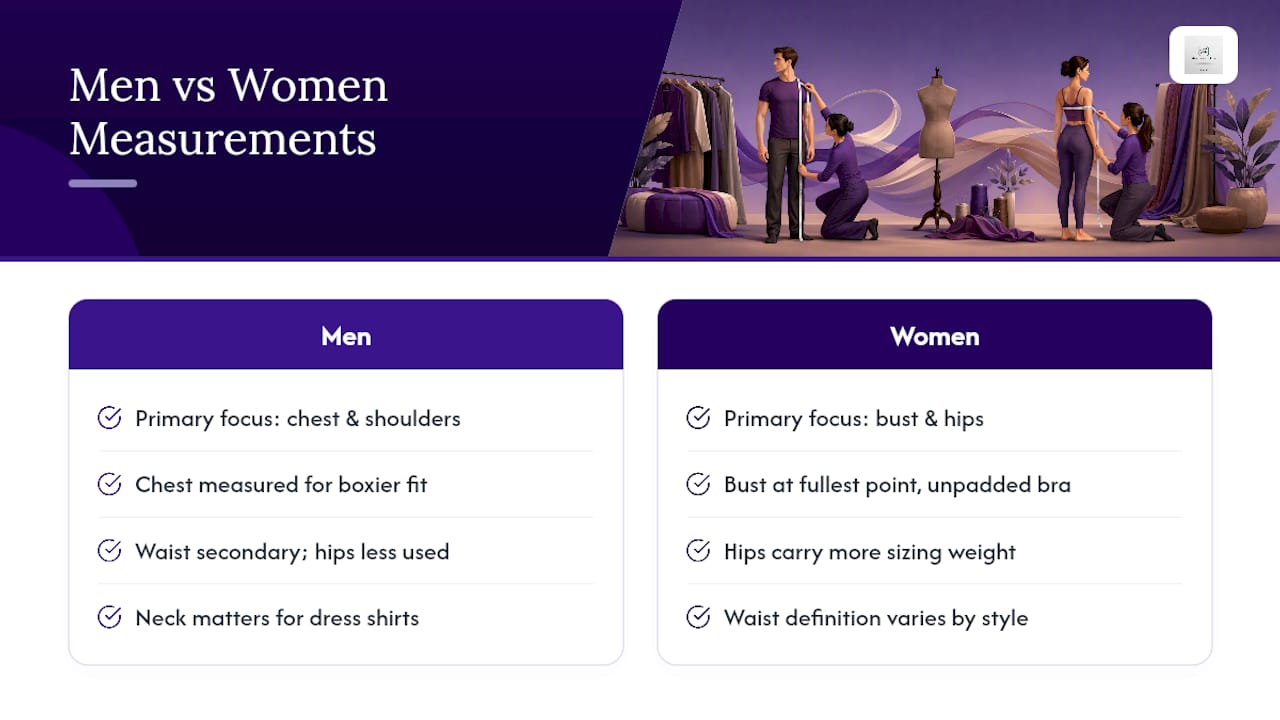
Measuring Menโ€™s vs. Womenโ€™s Clothing: What Changes

The core measurement points stay the same for everyone: chest or bust, waist, hips, shoulders, sleeve, and inseam. What changes is where garments are cut to sit and which measurement carries more weight for a given style.

Womenโ€™s clothing typically references bust rather than chest, measured at the fullest point over an unpadded bra, and hip measurements tend to carry more weight in sizing since dresses, skirts, and fitted bottoms are cut closer through that area. Waist definition also shifts more dramatically between styles. A high-waisted pant and a low-rise skirt can use two completely different waist readings on the same body.

Menโ€™s clothing leans harder on chest and shoulder width for tops and jackets, since structured menswear is built around a boxier, less tapered silhouette through the torso. Neck measurement matters far more for menโ€™s dress shirts and collared styles than it does for most womenโ€™s tops, where collar fit is rarely the limiting factor.

Inseam and rise conventions differ too. Menโ€™s pants are commonly labeled by waist and inseam in inches directly on the tag (that W/L format), while womenโ€™s bottoms more often use a numbered size that requires checking the brandโ€™s chart to translate into actual inches. Unisex and gender-neutral lines split the difference, usually publishing body measurements directly rather than relying on a size number at all, which sidesteps a lot of this confusion.

Whichever category youโ€™re shopping, the same rule applies: measure your actual body, then match to that specific chart rather than assuming your usual size carries over.

Measuring Men's vs. Women's Clothing: What Changes โ€” overview diagram

How to Measure for Dresses, Pants, and Jackets

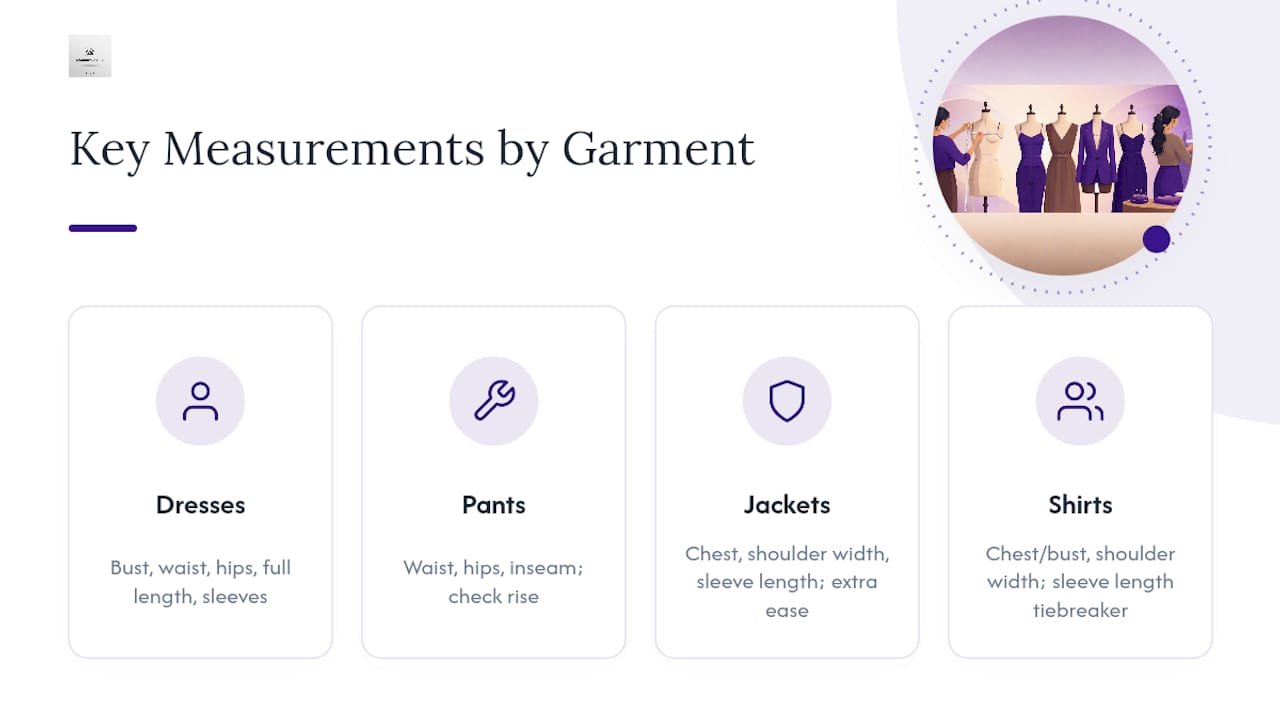
Different garment types lean on different measurements, so which numbers matter most changes depending on what youโ€™re buying or sewing.

Garment measurement priorities by clothing type

Dresses need the full set: bust, waist, and hips, plus full length from shoulder to hem. Because a dress spans your whole torso, an inaccurate waist reading throws off the fit through the entire midsection, not just one area. If the dress has sleeves, add your sleeve length measurement too, and if itโ€™s fitted through the hip, that hip number becomes the deciding factor over bust or waist.

Pants hinge on waist, hips, and inseam, with rise as a secondary factor for anyone particular about how low or high something sits. Measure both your natural waist and your lower jeans waist if youโ€™re unsure which rise a style uses, since guessing wrong here is the single most common pants-fit complaint.

Jackets and outerwear need chest, shoulder width, and sleeve length above everything else, plus a slightly more generous ease allowance than a fitted shirt would get, since jackets typically layer over other clothing. A wool blend jacket meant for layering over sweaters needs more ease built in than a lightweight blazer worn alone. Check the sleeve length carefully. Itโ€™s the measurement most often ignored, and an inch too short shows immediately at the wrist.

Shirts and tops rely primarily on chest or bust plus shoulder width, with sleeve length as the tiebreaker between two close sizes. A slightly loose chest fit can work fine, but shoulders that donโ€™t line up with the seam are a fit problem no amount of tailoring fixes easily.

What Most Fit Guides Get Wrong

Most measurement guides treat the process like a one-time chore. Measure once, write the numbers on a sticky note, done for life. Thatโ€™s backwards. Bodies shift with seasons, training, and age, and a measurement taken two years ago is often just wrong now, not slightly off.

The bigger blind spot is waist confusion. Nearly every return complaint Iโ€™ve seen traced back to pants sizing comes from someone measuring their natural waist and then buying a low-rise style, or vice versa. Guides mention this in passing; they should lead with it.

Iโ€™d also push back on the idea that averaging two measurements is optional or extra credit. Itโ€™s the difference between a number you can trust and a number youโ€™re hoping is right. Do it every time, not just when something feels off.

If you take one thing from all of this: measure over what youโ€™ll actually wear underneath, log the numbers with dates, and treat every brandโ€™s chart as its own language rather than assuming your size translates cleanly across labels.

โ€” Joseph Kvarnstrom

Find Your Fit With Shop Nova Online

Shop Nova Online is built for shoppers whoโ€™ve had it with tag sizes that mean nothing from one brand to the next. Every product page carries a detailed size chart built around real body measurements, not guesswork, so the numbers you just took actually translate into a size you can trust.

Men's Checkered Shirt & Cargo Shorts Set | Casual 2-Piece Outfit

Take the Menโ€™s Checkered Shirt & Cargo Shorts Set as an example. Pull up its size chart, line it against your chest, waist, and inseam numbers from this guide, and youโ€™ll know exactly which size to add to your cart before you check out, not after a return label shows up. For a closer look at fit through the shoulders and hem on structured menswear pieces, the menโ€™s fit notes cover the details that size charts alone donโ€™t always capture. Still stuck between two sizes? Reach out to customer service with your measurements in hand, and theyโ€™ll help you land on the right call before you buy.

Sources

Measurement steps and terminology in this guide draw on procedural guidance from Wave PLMโ€™s body measurement standards, jeans sizing and vanity sizing conventions from TailorSizeGuideโ€™s jeans size chart, and practical shopping checklists from YourSizerโ€™s measuring guide. Additional shirt-measuring tips came from imuskopโ€™s t-shirt measuring guide.

FAQ

What Is the 3-3-3 Rule for Clothes?

The 3-3-3 rule is a capsule wardrobe concept, not a measuring method. It suggests wearing 3 tops, 3 bottoms, and 3 pairs of shoes for 3 months, and it has nothing to do with body measurements.

Is a 32 Waist Actually 32 Inches?

Not always. Many mass-market brands add half an inch to a full inch of vanity sizing, so a labeled 32 waist can fit a body measuring closer to 32.5 or 33 inches depending on the brand.

Can I Measure My Body With My Phone?

Some apps use your phoneโ€™s camera to estimate measurements, but a flexible tailorโ€™s tape measured directly against your body remains the more reliable method, especially for waist and inseam accuracy.

Is a 29 Waist a Size 8 or 10?

It depends entirely on the brandโ€™s own size chart, since numbered sizing isnโ€™t standardized across companies. Always check the specific retailerโ€™s chart and match your measured waist in inches to their listed range rather than assuming a universal conversion.

How Often Should I Re-Measure My Body for Clothes?

Re-measure every 3 to 6 months, or sooner after any noticeable change in weight, muscle mass, or fitness routine, since even small shifts can move you into a different size range on certain charts.

Leave a comment

Read Also

See all Fashion & Style Blog | Womenโ€™s and Menโ€™s Fashion Trends
Yellow underarm stain on a white cotton T-shirt
  • Posted on
How to Remove Deodorant Stains From Clothes
Remove deodorant stains and yellow armpit buildup from shirts with dish soap, white vinegar or oxygen bleach. Step-by-step fixes by stain age and fabric.
Decorative T-shirt fit title card
  • Posted on
Measure First: 4 T-Shirt Fit Rules for Men
Measure shoulders, chest, sleeves and hem with flat garment specs, then match to slim, classic or relaxed cuts. Shop Nova maps each fit to your measurements.