• Posted on

65/35 Blends Often Win for Shoppers: Cotton vs Polyester Shirts

Cotton and polyester comparison title card

For everyday comfort and DTG printing, choose cotton. For performance, quick drying, and heavy-use durability, choose polyester. When you need both, a 50/50 or 65/35 blend is usually the smarter buy. The rest comes down to moisture regain, use case, and how you plan to care for the shirt.


TL;DR:

  • Polyester dries 50 to 70 percent faster than cotton and resists shrinking, making it ideal for athletic wear and frequent laundering.

  • Cotton offers superior softness, breathability, and biodegradability, but shrinks more and wrinkles easily, suitable for casual and day-to-day use.

  • Blends such as 65/35 or 60/40 cotton-polyester outperform pure fibers in durability and shape retention, especially for heavy-use or repeated wash shirts.

  • DTG printing bonds best with cotton, while dye-sublimation requires polyester, influencing fabric choice for graphic design quality.

  • For sensitive skin, natural fibers like cotton are recommended, but certifications like OEKO-TEX help mitigate irritation risks regardless of fiber type.


Shopnovaonline
Find Shirts That Fit Your Style

Shop Nova Online brings together comfortable fabrics, current designs, and versatile clothing for everyday dressing at competitive prices.

Shop Shop Nova Online

Table of Contents

How Cotton and Polyester Work: Absorption vs Wicking

Cotton and polyester behave differently the moment they touch skin, and that difference starts at the molecular level. Cotton is a natural cellulosic fiber, essentially the seed hair of the cotton plant, and its structure lets it absorb water into the fiber itself. That gives cotton a moisture regain around 7 to 8.5 percent, meaning the fiber physically soaks up sweat rather than pushing it away.

Polyester is a synthetic polymer built from petroleum derivatives, and it barely absorbs anything. Its moisture regain sits near 0.4 percent, so instead of soaking up moisture, polyester moves it along the fiber surface to the fabric’s exterior, where it can evaporate. That’s wicking, and it’s why a polyester running shirt feels dry after a hard mile while a cotton tee turns heavy and clingy.

The practical fallout shows up in several measurable ways:

  • Drying time: Polyester dries roughly 50 to 70 percent faster than cotton, since it never holds much water to begin with.

  • Wet strength: Cotton actually gets stronger when wet, which is part of why it survives repeated hot washes so well.

  • Abrasion resistance: Polyester typically holds up for 30,000 or more Martindale cycles before showing wear, compared with roughly 10,000 to 20,000 for cotton depending on weave and weight.

  • Shrinkage: Untreated cotton shrinks noticeably on its first hot wash; polyester barely moves.

  • Odor: Cotton releases sweat smell more easily in the wash; polyester’s synthetic fibers can trap bacteria and hold onto odor between washes, even when the shirt looks clean.

None of this makes one fiber universally “better.” It just means cotton and polyester solve different physical problems, and the shirt that wins depends entirely on what you’re asking it to do.

Pros and Cons: What Actually Matters When You’re Buying a Shirt

Cotton’s biggest selling point is how it feels against skin. It’s soft, breathable, and doesn’t trap heat the way tightly woven synthetics can, which is part of why it’s often recommended for people with eczema or general skin sensitivity. Cotton is biodegradable, so a cotton tee that outlives its usefulness decomposes more readily than synthetic fabric. The tradeoffs are real, though. Cotton shrinks if it isn’t pretreated, it dries slowly, and it wrinkles the moment it comes out of the dryer.

Polyester flips almost every one of those tradeoffs. It resists wrinkles, dries fast enough to pack for a weekend trip without worry, and shrugs off the abrasion that would wear a cotton shirt thin. The downside is that synthetic fibers hold onto body odor more stubbornly, they can shed microplastics in the wash, and the tight weave common in budget polyester shirts can feel clammy or irritate skin prone to friction and breakouts.

Non-ironing High-end Long-sleeved White Shirt  Anti-wrinkle Dress

Quick stat: Cotton’s moisture regain of 7 to 8.5 percent versus polyester’s 0.4 percent is the single number that explains almost every other difference on this list, from drying speed to how each fabric feels an hour into a workout.

Here’s the short version, side by side:

  • Cotton wins on: softness, breathability, biodegradability, skin tolerance.

  • Polyester wins on: dry time, wrinkle resistance, abrasion durability, shape retention.

  • Cotton loses on: shrinkage, slow drying, wrinkling.

  • Polyester loses on: odor retention, microplastic shedding, potential skin friction.

Which Fabric Fits Your Use Case?

Matching fiber to activity solves most buying decisions before you even look at a price tag.

  1. Everyday wear and casual tees. Cotton is the default here. It breathes, it’s comfortable against skin all day, and it’s what most people expect a basic tee to feel like.

  2. Athletic and gym wear. Polyester is the practical choice. It wicks sweat and dries fast enough to keep you from carrying wet fabric through an entire workout.

  3. Work uniforms and team shirts. A blend, usually 50/50 or 65/35, handles repeated washing and heavy use better than either fiber alone.

  4. Sleepwear. Cotton again, for the same breathability reasons that make it good for daytime comfort, just without the sweat factor.

  5. Sensitive or eczema-prone skin. Natural fibers like cotton are generally the dermatology-backed recommendation, since synthetics can trap heat and moisture against skin that’s already reactive.

Pro Tip: If you’re ordering shirts in bulk for a team, a store, or an event, a 65/35 poly-cotton blend is often the smartest operational choice. It resists shrinkage across dozens of wash cycles better than straight cotton, which means every shirt in the batch still fits the same a year later.

One caveat worth repeating: dermatology sources note that finishes and dyes on both cotton and polyester can trigger reactions independent of the base fiber, so a certification like OEKO-TEX is a useful trust signal regardless of which fabric you land on.

Washing, Drying, and How Long Each Fabric Actually Lasts

Polyester and poly-heavy blends barely shrink at all, since the synthetic fiber doesn’t swell and contract with water the way cellulose does.

For longevity, wash cotton in cool to warm water and skip the high dryer heat that accelerates shrinkage and fiber breakdown. Polyester tolerates warm washes fine but melts or glazes under a hot iron, so keep the iron on a low synthetic setting or skip ironing altogether. Blended fabrics split the difference and are more forgiving of laundry mistakes overall.

A few habits stretch the life of either fabric:

  • Wash inside out to reduce surface pilling and fading.

  • Skip fabric softener on polyester athletic wear, since it can clog the fibers that handle wicking.

  • Air-dry when possible; heat is the main driver of shrinkage and fiber fatigue in both materials.

Pro Tip: Think in cost-per-wear, not sticker price. A blended shirt that costs a couple dollars more but survives twice as many washes without shrinking or thinning almost always ends up cheaper per wear than a bargain cotton tee that’s misshapen by month three.

What Blend Ratios Actually Deliver

Blend percentages aren’t marketing noise. Each ratio shifts feel and performance in a specific direction.

  • 50/50 cotton-poly: The middle ground. You get noticeably more wrinkle resistance and shrink control than pure cotton, while keeping more softness than pure polyester.

  • 60/40 cotton-poly: Leans toward cotton’s hand-feel while still meaningfully reducing shrinkage compared to 100% cotton.

  • 65/35 cotton-poly: A common uniform and team-shirt ratio. It holds up to frequent washing far better than straight cotton, and it’s still cotton-dominant enough to feel comfortable against skin.

Blends with 35 percent or more polyester tend to stabilize their shrinkage after two or three washes, which is why pre-washed blend shirts fit more predictably over time than raw cotton. Most blends still take DTG printing reasonably well, though results get crisper as the cotton percentage rises. If you’re buying a cotton-heavy blend and plan to wash it hot, sizing up slightly is a reasonable hedge against the shrinkage that still happens, just less severely than with 100% cotton.

Printing and Appearance: Which Fabric Holds Ink Best

The print method you want should decide the fabric, not the other way around. DTG (direct-to-garment) printing works best on cotton because water-based inks bond directly with natural fibers, producing sharp detail and soft-hand prints. Dye-sublimation is polyester-specific. It uses heat to turn dye into a gas that fuses with synthetic fiber, which is why you’ll never see a sublimated print on a cotton shirt.

  • DTG needs pretreatment on cotton to keep colors vibrant and prevent ink from sinking too deep into the weave.

  • DTF (direct-to-film) and screen printing are more forgiving and work across both fibers with minor process adjustments.

  • Heat-curing temperatures differ by fabric, so a print shop running mixed orders needs separate settings for cotton and poly-heavy garments.

  • For color longevity on either fabric, wash prints inside out in cold water and skip the dryer’s high-heat cycle.

Shopnovaonline’s Lineup Maps Directly to These Recommendations

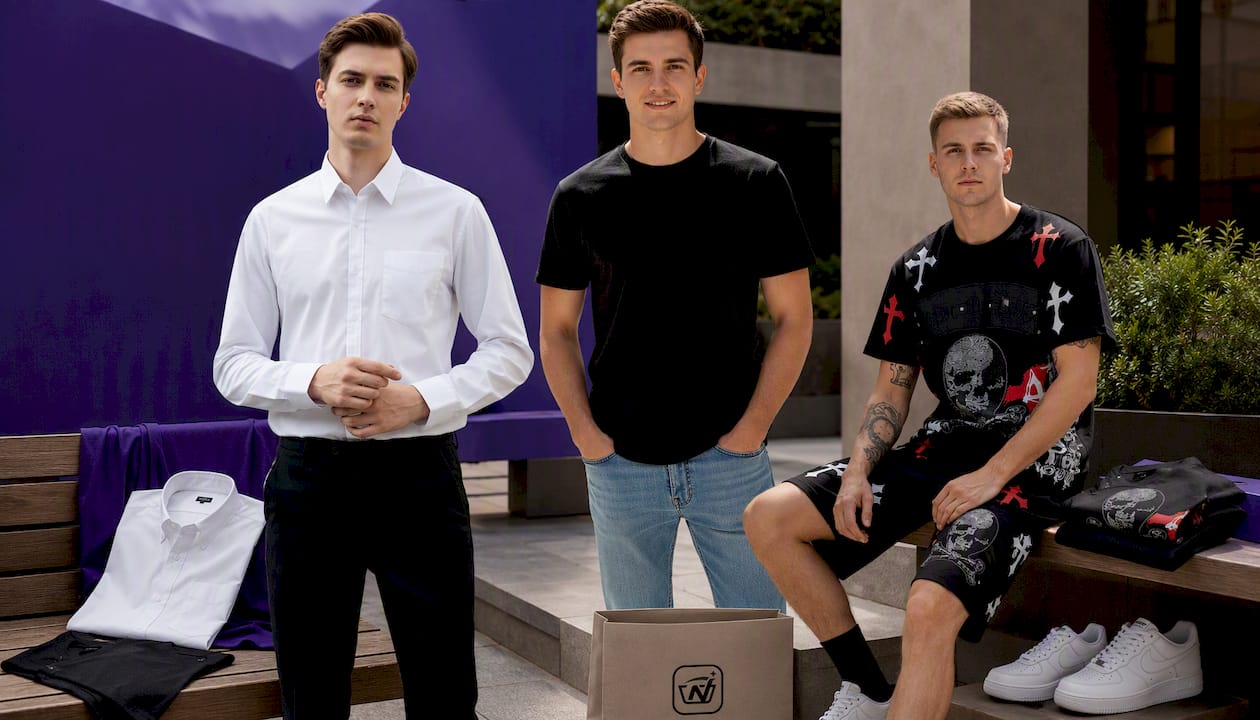
The catalog of the featured online retailer reflects a use-case split similar to this comparison. The Non-ironing High-end Long-sleeved White Shirt is built for the low-maintenance, wrinkle-resistant crowd, ideal for travel or office wear where ironing isn’t an option. The Men’s Cropped Cotton T-Shirt serves the everyday-comfort buyer who wants breathable cotton in a casual streetwear cut. The Cotton Print Chrome Cross T-Shirt & Shorts Set shows off cotton’s print-friendly side, with graphic detail that holds up the way DTG printing performs best on natural fiber. The retailer emphasizes fabric comfort and quality as priorities, and offers inclusive sizing to accommodate various fits.

The Buying Rule That Actually Holds Up

Most fabric debates online treat cotton and polyester like a rivalry with a single winner. It isn’t. The honest rule is this: buy cotton when comfort and appearance are the job, buy polyester when performance and durability are the job, and stop treating blends as a compromise, because a 65/35 blend often outperforms either pure fiber for anything that gets washed weekly. The sustainability trade-off is real in both directions. Cotton biodegrades but demands heavy water use to grow; polyester never fully breaks down but can be produced from recycled material. Neither fiber gets to claim the moral high ground outright, so choose based on what the shirt actually has to survive.

— Joseph Kvarnstrom

Shop the Fabrics That Match Your Needs at Shopnovaonline

This catalog is built around the practical idea that you shouldn’t have to choose between comfort and price to find the right shirt. Whether you need a wrinkle-free dress shirt for the office or a soft cotton tee for the weekend, the lineup covers both ends of this fabric comparison without forcing a compromise.

Non-ironing High-end Long-sleeved White Shirt  Anti-wrinkle Dress

If low-maintenance and travel-ready is the goal, the Non-ironing High-end Long-sleeved White Shirt skips the ironing board entirely. If breathable cotton comfort is what you’re after, the Men’s Cropped Cotton T-Shirt delivers that everyday softness in a modern streetwear cut. And for a printed cotton option that shows off graphic detail well, the Cotton Print Chrome Cross T-Shirt & Shorts Set is worth a look. Browse the full range of men’s and women’s clothing or explore polos, coats, dresses, and more to find your fit, then place your order directly on the site.

Sources

FAQ

Is Cotton or Polyester Better for T-Shirts?

Cotton is better for everyday comfort, breathability, and DTG printing, while polyester wins for athletic performance and durability. Most shoppers choosing a basic casual tee are better served by cotton or a cotton-heavy blend.

Why Does Polyester Dry So Much Faster Than Cotton?

Polyester has a moisture regain near 0.4 percent compared to cotton’s 7 to 8.5 percent, so it barely absorbs water in the first place. That structural difference lets polyester dry 50 to 70 percent faster than cotton.

What’s the Best Fabric Blend for Team Uniforms?

A 65/35 or 60/40 cotton-polyester blend is generally the strongest choice for uniforms because it resists shrinkage across repeated washes while still feeling comfortable against skin. It also holds up to frequent laundering better than 100% cotton.

Does Shopnovaonline Sell Both Cotton and Polyester-Style Shirts?

Yes. Shopnovaonline offers cotton options like the Men’s Cropped Cotton T-Shirt alongside easy-care, wrinkle-resistant styles like the Non-ironing High-end Long-sleeved White Shirt. Current pricing is available directly on the product pages.

Is Cotton Really Better for Sensitive Skin Than Polyester?

Dermatology guidance generally favors natural fibers like cotton for sensitive or eczema-prone skin, since synthetics can trap heat and moisture that trigger irritation. That said, dyes and finishes on either fabric can still cause reactions, so certifications like OEKO-TEX are worth checking regardless of fiber.

Leave a comment

Read Also

See all Fashion & Style Blog | Women’s and Men’s Fashion Trends
Yellow underarm stain on a white cotton T-shirt
  • Posted on
How to Remove Deodorant Stains From Clothes
Remove deodorant stains and yellow armpit buildup from shirts with dish soap, white vinegar or oxygen bleach. Step-by-step fixes by stain age and fabric.
Decorative T-shirt fit title card
  • Posted on
Measure First: 4 T-Shirt Fit Rules for Men
Measure shoulders, chest, sleeves and hem with flat garment specs, then match to slim, classic or relaxed cuts. Shop Nova maps each fit to your measurements.