• Posted on

Measure These 8 Numbers: Men's Polo Fit Guide with Shop Nova Matches

Decorative polo fit measurement title card

Most men should default to a modern or regular fit polo, then confirm it with two measurements: shoulder seam placement and chest circumference. If you carry more weight in your midsection or want maximum comfort, size for a classic fit instead. If youโ€™re lean or athletic and want a tailored look, go slim. Whichever you pick, measure the shoulder seam and chest first. Those two numbers decide fit more than anything else.


TL;DR:

  • Measuring shoulder seam and chest circumference accurately ensures the proper fit more than relying on fit labels like slim or regular, which vary across brands.

  • The ideal polo fit depends on body type, with athletic builds needing a modern fit, larger midsections favoring classic fit, and lean frames suited to slim cuts.

  • Use relaxed, unstretched measurements of a well-fitting polo as a template, and verify measurements on garment product pages before purchasing.

  • Visually check fit by ensuring shoulder seams sit at shoulder edges, sleeve lengths reach mid-bicep, and thereโ€™s one to two inches of ease at the chest.

  • Always compare your personal measurements to actual garment measurements, doubling key flat measurements, to avoid sizing mistakes and returns.
Shopnovaonline
Find Your Everyday Polo Style

Shop Nova Online brings trendy polos and casual clothing together with comfortable fabrics, versatile styles, and a range of sizes.

Browse Shop Nova Online

Table of Contents

What Are the Different Polo Fit Types?

โ€œClassic,โ€ โ€œmodern,โ€ โ€œregular,โ€ and โ€œslimโ€ get printed on hang tags like they mean the same thing across every brand. They donโ€™t. Hereโ€™s what each one actually delivers on your body.

  • Classic fit: Generous chest ease, a boxier cut through the torso, and sleeves that sit looser around the bicep. Built for comfort and movement, not for showing off a silhouette. Works well if you have a larger midsection or just hate feeling restricted when you sit down.

  • Modern or regular fit: A tapered waist without hugging it, sleeves that graze the arm instead of ballooning, and enough chest room to layer an undershirt. This is the fit that works for the widest range of body types, which is why itโ€™s the safe default.

  • Slim fit: Cut close through the chest, waist, and arms. Flattering on lean or athletic builds, unforgiving on anyone carrying extra weight in the stomach or back. A slim polo with too little chest ease will pull at the buttons the moment you raise your arms.

Chest is the first number knit-fabric shoppers should read, because piquรฉ and jersey knits cling and stretch differently than woven shirts, and Sizelyโ€™s measuring guide treats it as the anchor measurement for a reason. Length runs a close second since it determines whether the shirt still looks intentional when untucked.

None of these labels are standardized. A โ€œslimโ€ fit from one brand can run roomier than another brandโ€™s โ€œregular.โ€ Thatโ€™s why checking the garmentโ€™s actual flat measurements, not just the fit name on the tag, matters more than trusting the label alone. Cutter & Buckโ€™s polo size guide is a good example of a brand that publishes those numbers clearly instead of hiding behind generic size labels.

How Do You Measure a Polo Shirt Correctly?

Lay the shirt flat on a bed or table, button it closed, and smooth out any wrinkles before you touch a tape measure. Stretched fabric gives you a false reading, and knit polos are especially prone to this. Sizelyโ€™s guide confirms that relaxed, unstretched measurements are the only ones worth trusting, since a stretched reading overstates the garment and leaves you with a shirt that arrives tighter than expected.

Work through these eight points in order:

  1. Chest: Measure straight across, about one inch below the armhole, from seam to seam.

  2. Length: Run the tape from the highest point of the shoulder seam straight down to the hem.

  3. Shoulder: Measure seam to seam across the back, where the sleeve meets the shoulder.

  4. Upper sleeve: From the shoulder seam down to where the sleeve hem begins.

  5. Lower sleeve (if the shirt has a longer sleeve): Continue from the upper sleeve point to the cuff edge.

  6. Cuff: Measure straight across the sleeve opening.

  7. Waist: Measure straight across at the narrowest point, usually a few inches below the armhole.

  8. Hem: Measure straight across the bottom opening of the shirt.

Chest, waist, hem, and cuff are all single flat measurements, so you double them to get the actual body circumference. Length, shoulder, and sleeve are single passes; you donโ€™t double those. A flat chest reading of 20 to 21 inches doubles to roughly 40 to 42 inches of body chest, which lands squarely in medium territory on most charts.

If you own a polo that already fits the way you like, lay it flat and measure it using this same method. That garment becomes your personal template for every future online purchase.

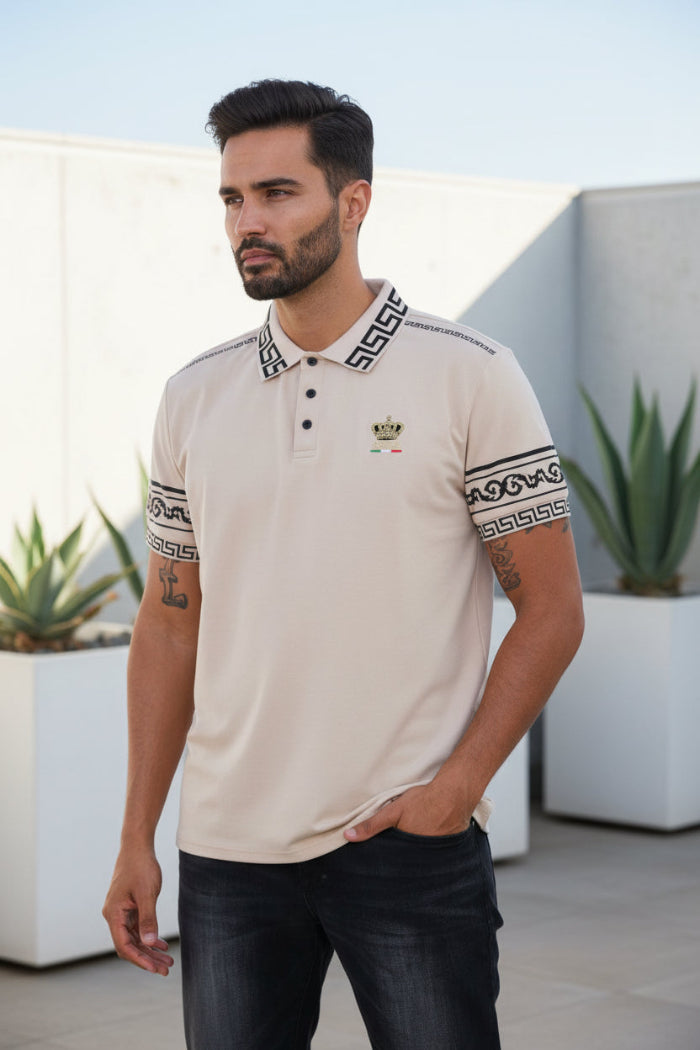
Version Couture Polo Button Down Shirt

How Do You Check Polo Fit Visually?

Measuring tape gets you close. A quick visual check confirms you got it right, whether youโ€™re standing in front of a mirror or trying one on before it ships.

  • Shoulder seam test: The seam should sit right at the edge of your shoulder bone, not sliding down your arm and not creeping up toward your neck. This is the single most reliable indicator of correct size, since a misplaced shoulder seam throws off how everything else drapes.

  • Sleeve and cuff check: The sleeve hem should land around mid-bicep. Slide two fingers under the cuff. If they fit with slight resistance, the cuff is right; if they slide in with room to spare, size down.

  • Chest pinch test: Pinch the fabric at your chest. You want roughly one to two inches of fabric to grab, enough ease to move without the shirt going flat against your skin.

  • Placket and hem check: The button placket should lie flat with no gapping or pulling between buttons. Hem length should hit around the top of your hip if you plan to wear it untucked, longer if you tuck it.

Watch for red flags: a dropped shoulder seam that sits an inch or more below your actual shoulder, an X-shaped wrinkle pattern radiating from the placket buttons (a sign the chest is too tight), or excess fabric pooling at the hem when you raise your arms.

Pro Tip: Do the raised-arm test before you decide a shirt fits. Lift both arms overhead. If the hem rides up past your belt line or the shoulder seam yanks toward your neck, the shirt is too small, no matter how it looks standing still.

Which Polo Fit Works Best for Your Body Type?

Your build should drive the fit decision more than personal taste in isolation, because the wrong fit on the wrong body draws attention to exactly what youโ€™re trying to downplay.

  • Athletic build (broad shoulders, narrow waist): A slim or modern fit through the torso with enough shoulder room to avoid seam strain. Sizing for your shoulders first, then checking whether the waist needs a slight take-in at a tailor, works better than sizing down and hoping the shoulders stretch.

  • Slim or lean build: Slim fit is your friend here. A regular fit will hang loose and read sloppy rather than relaxed.

  • Larger midsection: Classic fit, sized by chest, not by waist. A relaxed, loose-fit polo built with a longer hem avoids the riding-up problem that plagues fitted styles on a bigger frame.

  • Broad shoulders specifically: Size up for the shoulder measurement even if it means the waist runs slightly loose. A tailor can nip in a waist far more easily than they can let out a shoulder seam that was never there.

For styling, a modern-fit polo tucked into chinos reads business casual without trying too hard. The same fit worn untucked over shorts shifts casual instantly. Slim fits pair naturally with tailored pants where the whole point is a clean line; classic fits do better with relaxed denim where comfort is the priority. Piquรฉ knit construction, the kind detailed in C Wearโ€™s classic piquรฉ polo, tends to hold its shape better through a workday than lighter jersey knits, which matters if youโ€™re choosing a fit for an office setting.

Whatโ€™s the Fastest Way to Size Yourself for a Polo?

Copy these eight numbers before you shop, and youโ€™ll never have to guess again:

  • Chest (one inch below armhole) doubled

  • Length (shoulder seam to hem)

  • Shoulder (seam to seam)

  • Upper sleeve

  • Lower sleeve

  • Cuff (doubled)

  • Waist (doubled)

  • Hem (doubled)

Write these down once, save them in your phone, and every future purchase becomes a five-second comparison against a product pageโ€™s garment measurements instead of a guessing game with unfamiliar size labels.

Before checkout, run through a short buying checklist: order your usual size plus one size up if the brand runs small (check the reviews for repeated sizing complaints), confirm the fabric content since cotton/poly blends behave differently than 100% cotton after a wash, and check the return window before you buy. If youโ€™re ordering polos for a team or group, buy one sample first and account for shrinkage after a wash test rather than guessing sizes for the whole group.

Garment measurements are often published on product pages for exactly this reason. Content on fit and styling, including the menโ€™s polo shirts guide on the Shop Nova blog, is written and reviewed by Joseph Kvarnstrom.

Why Fit Beats Fabric Every Time

The polo industry spends most of its marketing budget talking about fabric: moisture-wicking this, pima cotton that. Fabric matters, but itโ€™s not what makes a shirt look good or bad on you. Fit is doing that work, and most men never measure themselves before they buy.

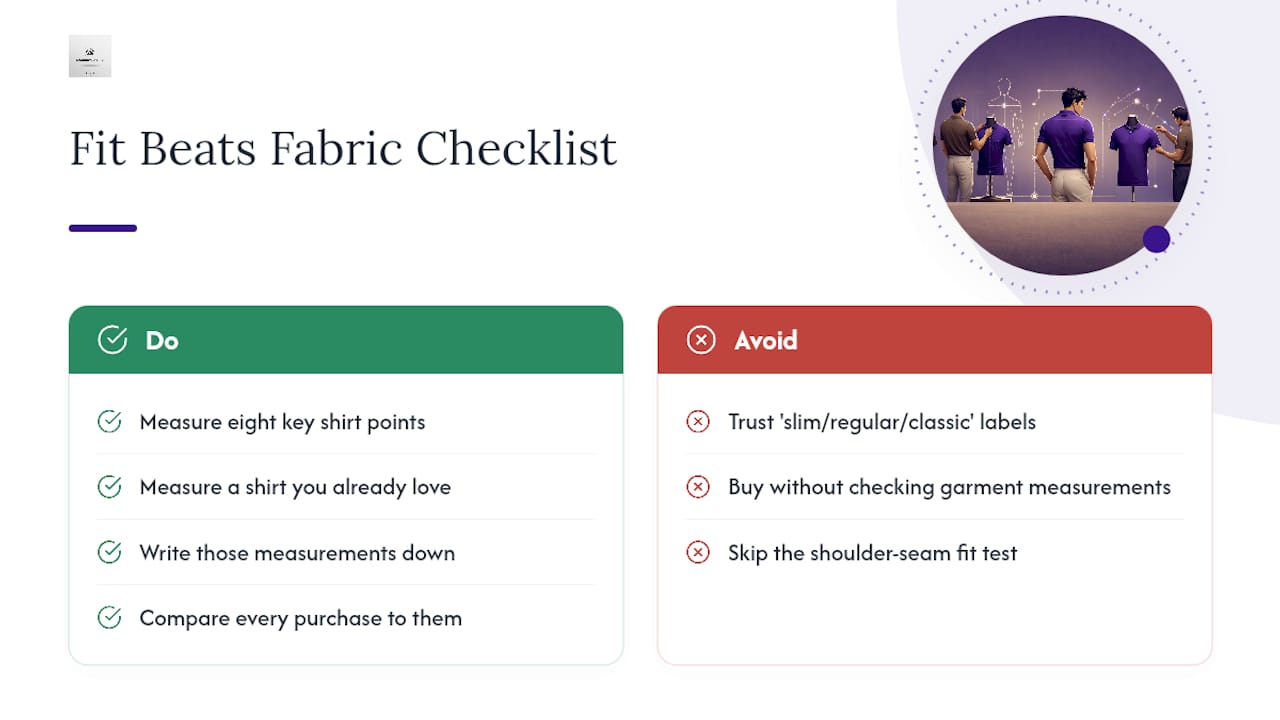
Why Fit Beats Fabric Every Time โ€” overview diagram

Hereโ€™s what the conventional advice gets wrong: it treats โ€œslim,โ€ โ€œregular,โ€ and โ€œclassicโ€ as if theyโ€™re consistent categories you can trust across brands. They arenโ€™t. Iโ€™d rather see a shopper ignore the fit label entirely and go straight to the garment measurements every time. The shoulder seam test alone catches more sizing mistakes than any fit description a brand writes for its own marketing.

If you take one thing from this guide, take the eight-point measuring habit. Measure a shirt you already love, write those numbers down, and compare every future purchase against them. That single habit will save you more returns than reading fit descriptions ever will.

โ€” Joseph Kvarnstrom

Find Your Fit in the Shop Nova Polo Lineup

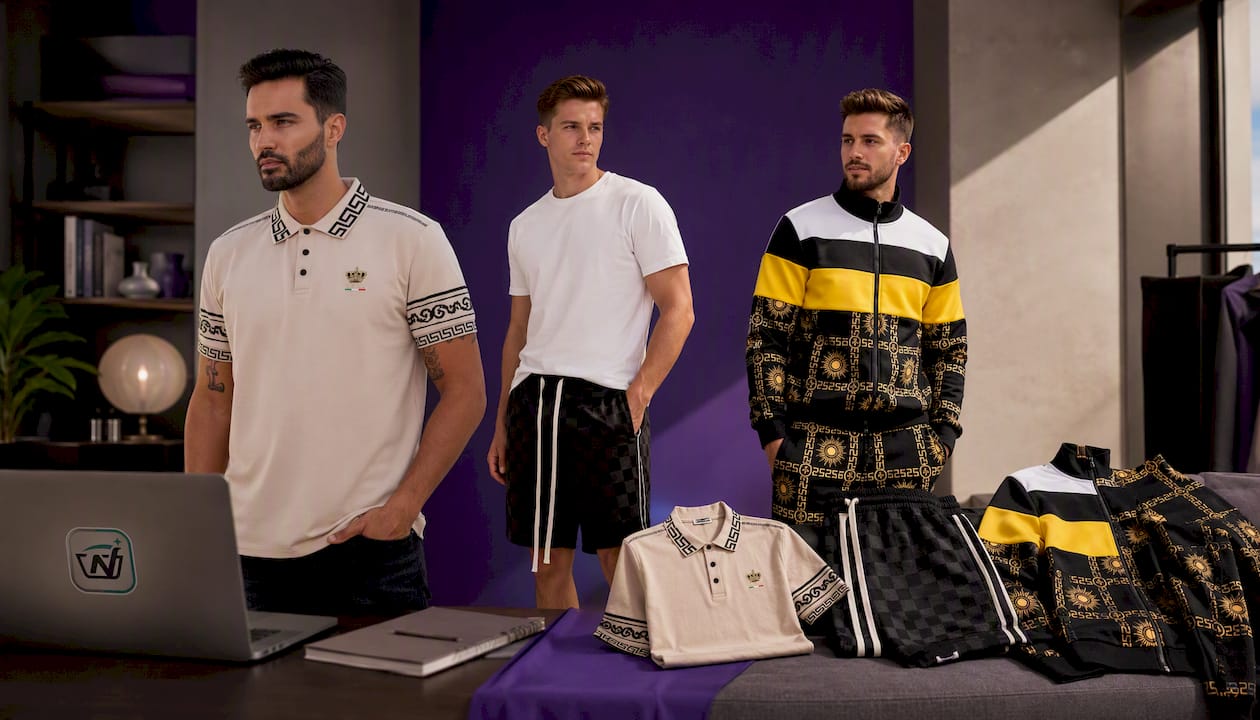
Once you know your measurements, matching them to the right shirt gets a lot easier. The Version Couture Polo Button Down Shirt works as a modern-fit option for anyone who wants a tailored look without going full slim. Pair it with something relaxed on the bottom, like the checkered stripe track shorts, for an off-duty look that still feels put-together.

Version Couture Polo Button Down Shirt

If youโ€™re building out a casual rotation beyond polos, the printed poly-span track set gives you a matching two-piece option for the days you want comfort without sacrificing style. Product pages typically list garment measurements, fabric content, and return policy details to aid comparison before purchase. It may help to order two sizes if unsure between fits, then keep the one that fits best according to shoulder seam and chest pinch tests. Visit online polo collections to check measurements against your own before purchasing.

Where to Verify Polo Measurements and Size Charts

Manufacturer size charts give you a starting point, but garment flat measurements are the ones that actually predict fit.

Use brand charts as a starting estimate, then confirm with the shirtโ€™s actual flat measurements before you buy.

Sources

FAQ

Does polo fit run true to size?

It varies by brand, which is exactly why relying on a fit label like โ€œregularโ€ or โ€œslimโ€ alone is risky. Compare garment flat measurements against your own numbers rather than trusting the size printed on the tag.

How do I know my polo size?

Measure a polo that already fits you well: chest, length, shoulder, sleeve, cuff, waist, and hem. Compare those numbers to the garment measurements listed on the product page youโ€™re considering, doubling chest, waist, hem, and cuff since those are single flat readings.

How should a polo fit overall?

The shoulder seam should sit right at your shoulder edge, the sleeve should end around mid-bicep, and you should be able to pinch one to two inches of fabric at the chest. Length should clear your hip if you wear it untucked.

How tight should a polo fit?

Tight enough that the fabric doesnโ€™t billow, loose enough that you can pinch one to two inches at the chest and raise your arms without the hem riding up. If the placket pulls between buttons when youโ€™re standing still, itโ€™s too tight.

Leave a comment

Read Also

See all Fashion & Style Blog | Womenโ€™s and Menโ€™s Fashion Trends
Yellow underarm stain on a white cotton T-shirt
  • Posted on
How to Remove Deodorant Stains From Clothes
Remove deodorant stains and yellow armpit buildup from shirts with dish soap, white vinegar or oxygen bleach. Step-by-step fixes by stain age and fabric.
Decorative T-shirt fit title card
  • Posted on
Measure First: 4 T-Shirt Fit Rules for Men
Measure shoulders, chest, sleeves and hem with flat garment specs, then match to slim, classic or relaxed cuts. Shop Nova maps each fit to your measurements.